C1Expanding Digital Access & Inclusion

Connecting the country, from the national backbone to the last mile

Affordable, reliable internet access extended to all 26 provinces — for citizens, schools, universities and public institutions.

Component scopeC1
workstreams
Sub-components
3
objectives
10
Horizon
2029
Status
Under implementation
The problem

The network stops where the market stops paying for itself.

The Congolese connectivity gap is not first a technology problem: it is a problem in the economics of density, compounded by the energy constraint. As long as the cost of serving a subscriber exceeds what that subscriber can pay, no operator will go — and the gap widens as the rest of the economy digitalises.

01

A geography that multiplies fixed costs

Across 2.3 million square kilometres, the Congolese population is split between a few dense urban centres and a scattering of remote localities, often poorly served by road. Each kilometre of fibre costs more to lay, protect and maintain than in a compact country — and serves fewer subscribers once laid. That equation, not a technology lag, explains international bandwidth of 6.65 kbit/s per capita at project start.

02

The price the user pays is set upstream

For want of sufficient national transport capacity, part of the traffic is paid for in international transit or satellite capacity, at the highest tariffs in the chain. That wholesale cost feeds straight through to retail prices; high prices hold back usage; weak usage destroys the investment case that would have extended the network. The loop closes on itself, and coverage stops at the profitability line.

03

A divide that widens as the State digitalises

Every public service moved online becomes, for uncovered territories, one more service that is less accessible than before. A school without a connection cannot open online resources to its pupils; an isolated health centre stays outside the shared record; a trader without a network stays confined to a neighbourhood market. Modernisation, if it is not preceded by access, produces exclusion.

Why public action

Transport networks display the classic features that justify public financing: very high fixed costs, low marginal cost, increasing returns, and benefits largely captured by third parties — schools, hospitals, administrations, businesses — that take no part in the investment decision. A single operator has no reason to carry a backbone alone when its competitors will benefit from it; the State does have an interest in that backbone existing and being open to all.

Part of the answer, moreover, costs almost nothing in capital: passive infrastructure sharing between operators, simpler rights of way, wholesale tariff transparency and quality-of-service monitoring bring prices down through rules rather than spending. Component 1 deliberately combines both levers — laying infrastructure, and correcting the market conditions that would otherwise render it useless.

One constraint remains that the telecoms sector cannot solve alone: energy. A radio site without reliable power is an out-of-service site, and a point of presence without backup power is a point of fragility. Deployment therefore relies on energy solutions sized for isolated sites, and is coordinated with electrification policy.

What this requires elsewhere
Context & scope

Component 1 covers the connectivity chain in full: the international capacity that opens the country to the global network, the transmission backbones that link the provinces, the regional networks that irrigate the territories, mobile coverage of underserved communities, and the connection of public institutions at the end of that chain. Each link conditions the next: hence a single component rather than separate projects.

It works through two levers of different natures, and their combination is what gives it coherence. The first is investment in open transport infrastructure, made available to operators on a non-discriminatory basis. The second is support to the sector framework — passive infrastructure sharing, rights of way, wholesale tariff transparency, quality-of-service monitoring — which acts on the price paid by the user without requiring further investment.

Its geographic scope is national, with an explicit prioritisation: the ten provinces of the Country Partnership Framework first, then the areas the market does not serve on its own. Targeting is not only territorial; it also concerns the groups whose access remains most constrained, particularly in rural areas and among women.

The component does not stand in for operators: it sells no subscriptions and runs no commercial network. It creates the conditions — transport infrastructure, rules of the game, connection of public institutions — from which private actors and administrations can each, in their own role, serve users.

Sub-components
  • 1.1
    Frameworks and enablers for access and inclusion
  • 1.2
    Extension of transmission networks
  • 1.3
    Connect citizens, universities and public institutions
The Project →
Component 1 — Digital access & inclusion
C1 · Presentation video · 4:12
Component 1 — Digital access & inclusion
Presentation video — coming soon

This slot is reserved for the component's presentation film. 16:9 format, FR/EN subtitles.

Component objectives

10 objectives

01extend national fibre-optic transmission networks
02improve international connectivity and available bandwidth per capita
03extend mobile broadband coverage to underserved communities
04connect public institutions, schools and universities
05reduce the cost of internet access for households and businesses
06strengthen the sector's regulatory framework and competitive conditions
07encourage infrastructure sharing between operators
08mobilise private capital alongside public financing
09reduce access gaps between urban and rural areas
10improve the digital inclusion of women and vulnerable populations
Main projects

8 main projects

The main projects run by the component.

01

The national fibre-optic backbone

Structuring infrastructure

Extending transmission networks is the first building block of national connectivity. The results framework sets a target of 11,500 kilometres of additional, climate-resilient fibre optic, prioritising the routes that link provinces to one another and to international landing points.

These transport links form the backbone on which operators and service providers then build their distribution networks. Without them, local coverage remains costly, unstable and confined to major urban centres.

  • 11,500 km of additional, climate-resilient fibre optic
  • priority to interprovincial routes and regional corridors
  • capacity opened to operators on a non-discriminatory basis
  • greater resilience through route redundancy

The end goal is not kilometres deployed, but the fall in wholesale bandwidth costs — the condition for affordable access for the end user.

02

Extending mobile broadband coverage

Across most Congolese territories, mobile is — and will long remain — the main way to access the internet. The project supports extending broadband coverage to several hundred currently underserved communities.

These areas are, by construction, the ones the market does not cover spontaneously: low density, limited income, difficult energy access. The project intervenes through targeted deployment support mechanisms, working with the universal service fund and operators.

  • around 650 new communities targeted for mobile broadband
  • targeting underserved rural and peri-urban areas
  • articulation with the universal service fund
  • energy solutions adapted to isolated sites
03

Connecting public institutions

An administration cannot digitalise without being connected. The project provides for progressively connecting around a thousand public institutions — ministries, deconcentrated services, hospitals, health centres and schools — to the broadband network.

This connection directly conditions the services built by Component 2: without a quality link to government platforms, interoperability and online services remain theoretical for frontline staff.

  • 1,000 public institutions given new or improved access
  • priority to health and education facilities
  • articulation with the GOVNET government network (Component 2)
  • operating costs factored in over time
04

Connecting universities and education institutions

Higher education institutions are a decisive entry point: they concentrate intensive usage, train the skills the country needs and spread digital practices across their environment.

Working with the Ministry of Higher Education, the project supports campus connections, access to online scholarly resources and the creation of institution networks pooling their connectivity.

  • connection of campuses and university libraries
  • pooled connectivity across institutions
  • articulation with Component 3 skills programmes
05

The regulatory framework and access enablers

Physical investment is not enough: the price and quality of access depend largely on sector rules. Sub-component 1.1 supports strengthening the regulatory framework, in support of the regulator and sector authorities.

The work covers competitive conditions, passive infrastructure sharing, access to rights of way, wholesale tariff transparency and quality of service.

  • support to the regulator and sector authorities
  • passive infrastructure sharing between operators
  • wholesale tariff transparency and quality-of-service monitoring
  • simplified deployment procedures
06

Digital inclusion and affordability

Access is not just signal availability. It also requires a device, an affordable plan, useful content and the skills to use it. A network available beyond the means of those it covers produces no inclusion: it moves the barrier rather than removing it.

Affordability is therefore measured as a share of income, not in absolute terms. The results framework tracks the retail price of a standard monthly mobile data plan against gross national income per capita, and targets a fall from 10.3 per cent to 5.1 per cent. Halving that effort cannot be decreed: retail prices follow wholesale costs, which depend on available transport capacity, passive infrastructure sharing and effective competition in the wholesale market. That is the direct articulation between this project and the two preceding ones.

Actual usage is the only measure that counts at the end of the chain. The results framework targets 30 million people using high-speed internet, of whom 15 million women. That second target is not an arithmetical restatement of the first: without explicit targeting of access schemes, extending coverage reproduces the usage gap between women and men instead of narrowing it.

  • standard monthly plan price: from 10.3 to 5.1 per cent of GNI per capita
  • 30 million high-speed internet users targeted, of whom 15 million women
  • affordability measures for devices and plans
  • attention to rural areas and vulnerable groups
07

International connectivity and regional integration

International bandwidth per capita is the most direct measure of a country's ability to take part in the digital economy. The project targets a marked rise by 2029, from a starting level of 6.65 kbit/s towards a target of 20 kbit/s.

That progression requires strengthened international links and deeper regional integration, within the APM IDEA approach to inclusive digitalisation in Eastern and Southern Africa.

  • international bandwidth per capita roughly tripled
  • strengthening national internet exchange points
  • integration into the regional APM IDEA approach
08

Mobilising private capital

Public financing alone cannot cover the country's infrastructure needs. The project seeks to mobilise significant private capital — in the order of 165 million dollars — alongside the public envelope.

This is pursued through public-private partnership mechanisms, risk-sharing adapted to low-return areas and a readable regulatory framework for investors.

  • in the order of 165 M USD of private capital sought
  • risk sharing in low-return areas
  • public-private partnership structures
The bigger picture

From the backbone to the last mile

Connectivity is only useful if the whole chain holds. Each link conditions the next — and it is the whole, not an isolated segment, that brings the price of access down.

01International connectivityopens the country to the global network
02National backboneslink the provinces to one another
03Regional networksirrigate the territories
04Mobile coveragereaches the communities
05Connectionshook up schools, health and administrations
06Affordabilitymakes access possible day to day
Attached indicators
ODP-1
≈million
People using broadband internet
Starting point: 0dont 15 millions de femmes
ODP-2
≈kbit/s
International bandwidth per capita
Starting point: 6,65 kbit/s

Orders of magnitude drawn from the project's results framework. These targets guide implementation; they are reviewed periodically with partners and do not constitute a guarantee of results.

Purpose

Access that changes daily life

Component 1 is measured less in kilometres than in the uses it makes possible.

study and access online resources from one's own province
consult a doctor remotely from a connected health centre
sell beyond one's local market and get paid by mobile
reach public services online without travelling
narrow the access gap between towns and countryside
pay less for better-quality access
Component lead
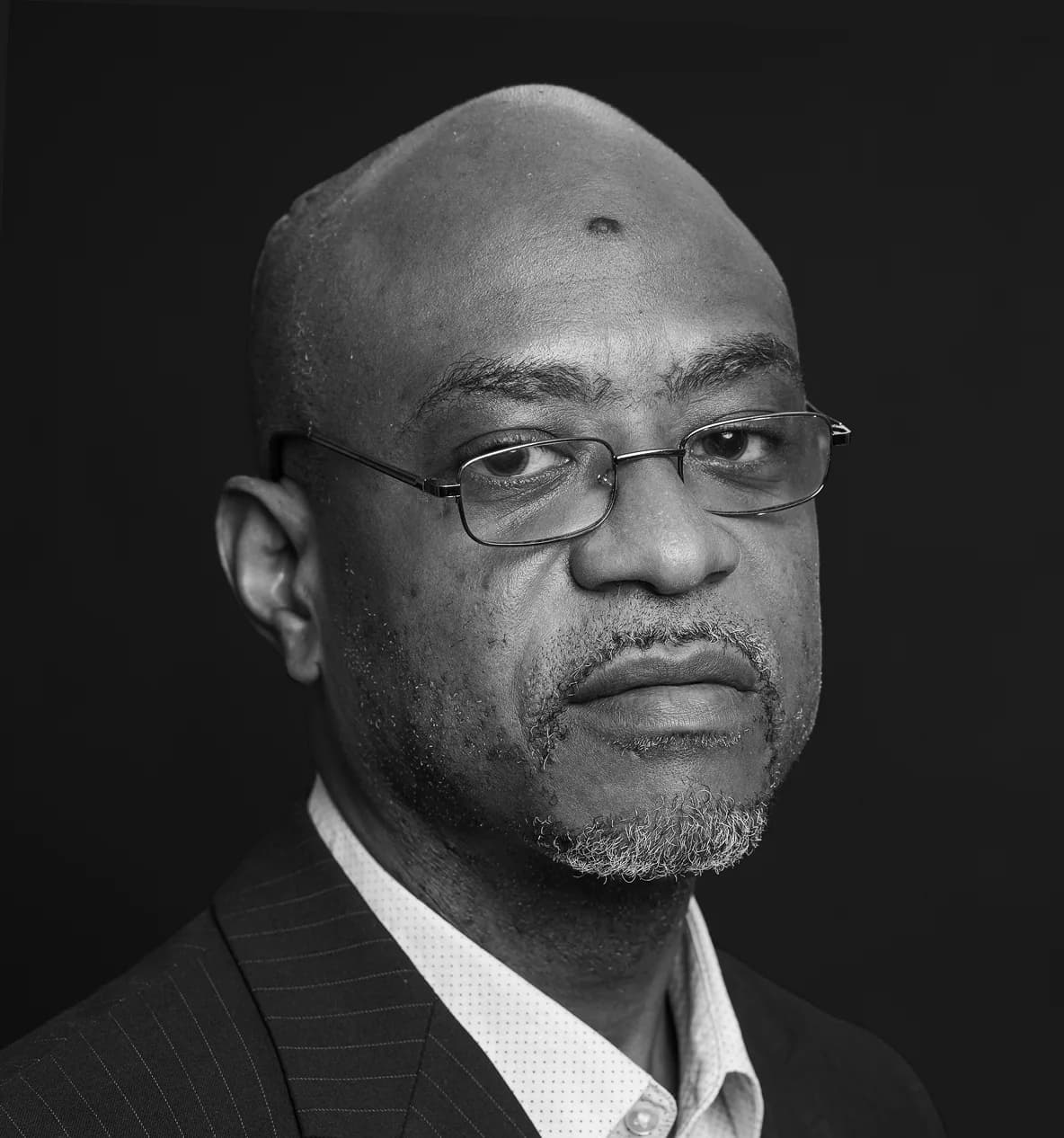
Michel Bienvenu Lamba Shwamunu Kalafayi — Head of Component 1
C1

Michel Bienvenu Lamba Shwamunu Kalafayi

Head of Component 1

Expanding digital access and inclusion: transmission backbones, coverage of underserved communities, connection of public institutions and affordability of data plans.

Scope
  • 1.1 Frameworks and enablers for access and inclusion
  • 1.2 Extension of transmission networks
  • 1.3 Connect citizens, universities and public institutions
Attached to this component

Component news

No news attached yet. All news →

Live tenders

No live notice for this component. Tenders →

Newsletter

Follow the transformation, month by month.

What changes for users: institutions connected, procedures that no longer require a journey, skills trained. And what is holding, when it is.

No spam. One-click unsubscribe.